HEARSEE Empowering Navigation for All

We're building technology that empowers people who are blind or have low vision to move freely and confidently in the world.

About Us

Since the beginning, Hearsee Mobility has collaborated closely with the blind and low-vision community to ensure our technology meets their real-world needs. Their input has shaped every aspect of our tools—from hardware and software functionality to everyday usability.

In early 2023, we tested our smart cane prototype in a live setting at the National Federation of the Blind conference. The results confirmed our approach: inclusive design powered by community insight. As we continue to refine our solutions, we remain focused on making assistive navigation tools both accessible and affordable to those who need them most.

We believe meaningful change is possible—against all odds—when innovation and lived experience work hand in hand.

A woman holding an abstract, colorful painting while smiling and standing next to her white mobility cane in an art gallery setting.
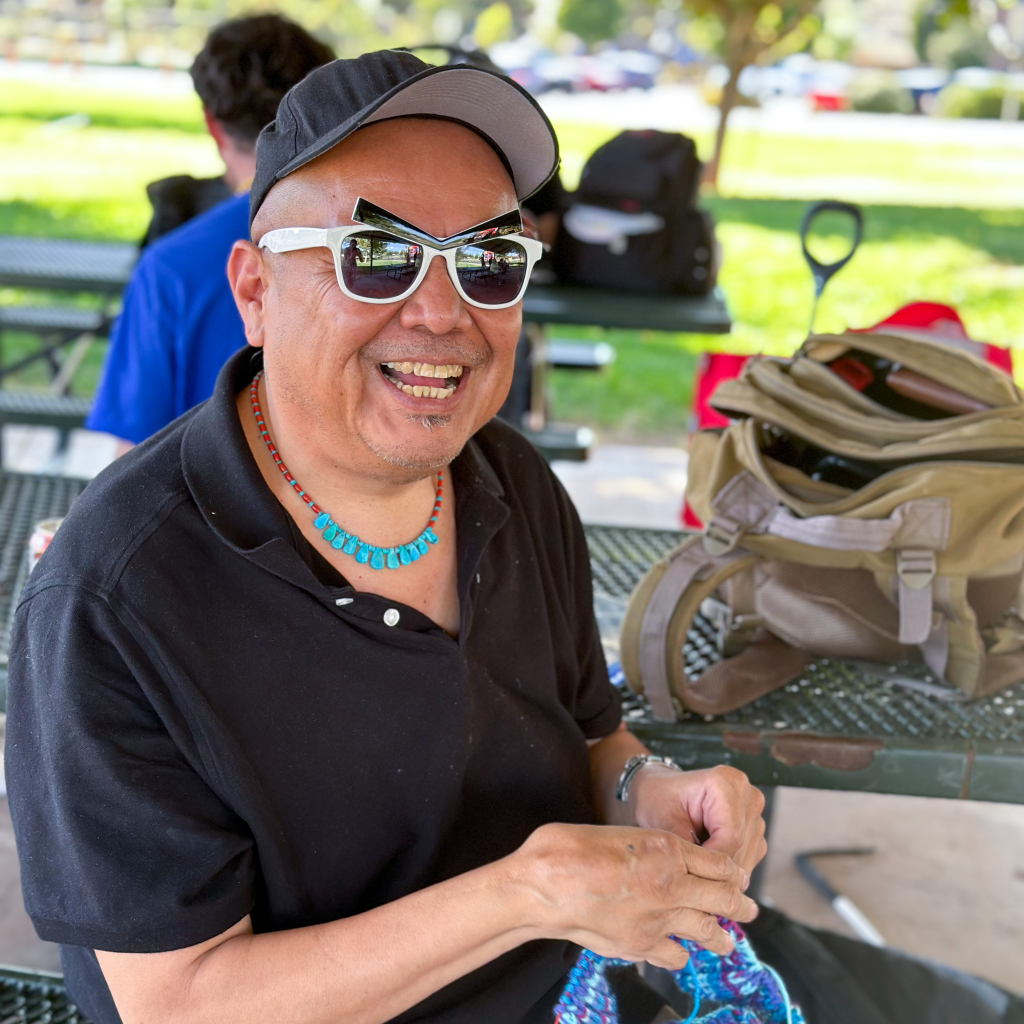
A man wearing white sunglasses, a black shirt, and a baseball cap, smiling while knitting a blue and purple yarn project at an outdoor park table.

Changes are possible against all odds.

Since our founding in 2018, Hearsee Mobility’s journey has been driven by purpose, innovation, and community. What began as a vision to improve navigation for blind and low-vision individuals has evolved into a multi-year effort involving dedicated research, community collaboration, and groundbreaking technology development. See the timeline below to discover how each milestone has brought us closer to a more accessible future.

Hearsee logo featuring a pattern of white dots radiating outward on a blue background with braille texture, with the word 'Hearsee' in bold white letters below.
2018
HEARSEE

Hearsee Mobility is founded as a 501(c)(3) nonprofit organization.
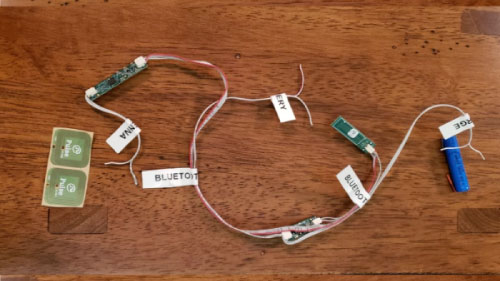
An overhead view of Hearsee's early prototype wiring layout on a wooden table, with labeled components including RFID tags, Bluetooth modules, and battery connections.
2019
Proof of Concept

Completed a proof of concept of the technology behind the first navigational solution—a device that could read a tag and broadcast a signal to a simple app. Met with members of the blind and low vision community in Salt Lake City, Utah, including Everette Bacon, President of the National Federation of the Blind in Utah, to gather valuable input.
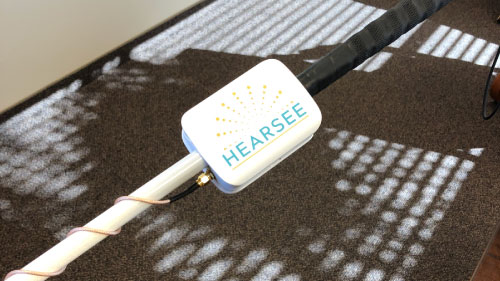
Close-up view of a white mobility cane prototype with a mounted Hearsee device, showing early-stage hardware development with a wrapped sensor wire.
2020
Research & Development

Researched and found a product development company that could design and build a working prototype—a cutting-edge cane based on the proof-of-concept technology. Continued to meet with the blind and low-vision community regarding the prototype design process. Their feedback was highly respected and implemented throughout the design process.
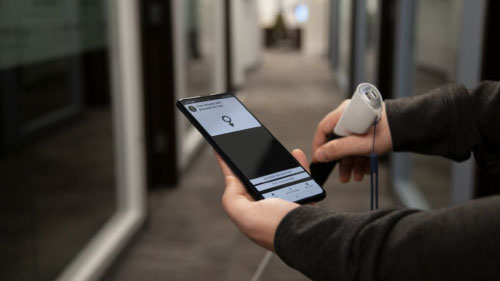
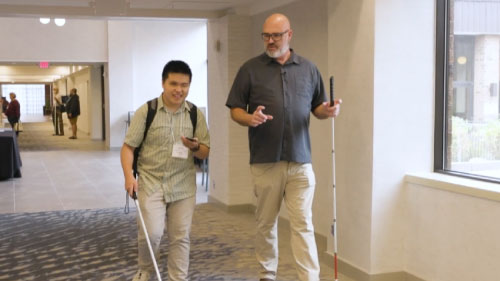
Two individuals walking in a building hallway using Hearsee’s first official cane prototype, engaged in conversation.
2021
Preliminary mechanical cane

Preliminary mechanical cane designs were made. The blind and low-vision communities were intricately involved, specifically in the design of the cane handle.
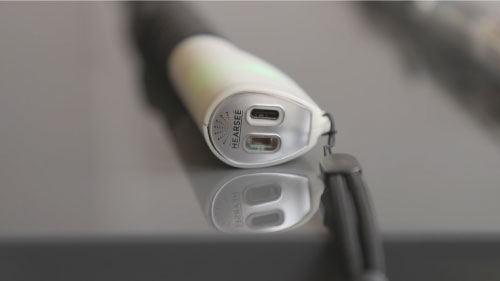
Close-up view of the Hearsee cane prototype’s handle, displaying the sensor module with two ports and a reflective surface underneath.
2022
first official prototype

The first official prototype of the cane was completed. It met 95% of the blind and low-vision community's requests. Due to software concerns, a new development company was found and was able to address and resolve the issues. Great strides were made in the development of the iOS and Android apps.  Great strides were made in the development of the iOS and Android apps.

Close-up view of the Hearsee cane prototype’s handle, displaying the sensor module with two ports and a reflective surface underneath.
2023
Tested the cane prototype

Tested the cane prototype in a real-world scenario at the National Federation of the Blind conference in Michigan with great success. The National Federation of the Blind Utah Center was the first mapped location outside of a controlled environment.

Powered by Purpose, Grounded in People

We don’t just design for the blind and low-vision community—we design with them. Every tool, every interaction, every line of code is shaped by real experiences. Our values keep us honest, bold, and impact-driven.

Our Values:

Access Without Barriers

Our community should never be charged for independence. We build tools that are free to the people who need them.

Inclusion Is Good Business

Making spaces accessible isn’t charity—it’s strategy. Inclusive design leads to broader reach and smarter growth.

Make It Personal

We’re hands-on, detail-oriented, and deeply invested. When we create something, we own it completely.

Lead with Vision

Pioneering isn’t easy—but progress demands courage. We lead because we believe better is possible.

Fail Bravely

There’s no growth without risk. We welcome setbacks as part of learning and evolving.

Work with Joy

Kindness, humor, and connection fuel our work. When people thrive, progress follows.